
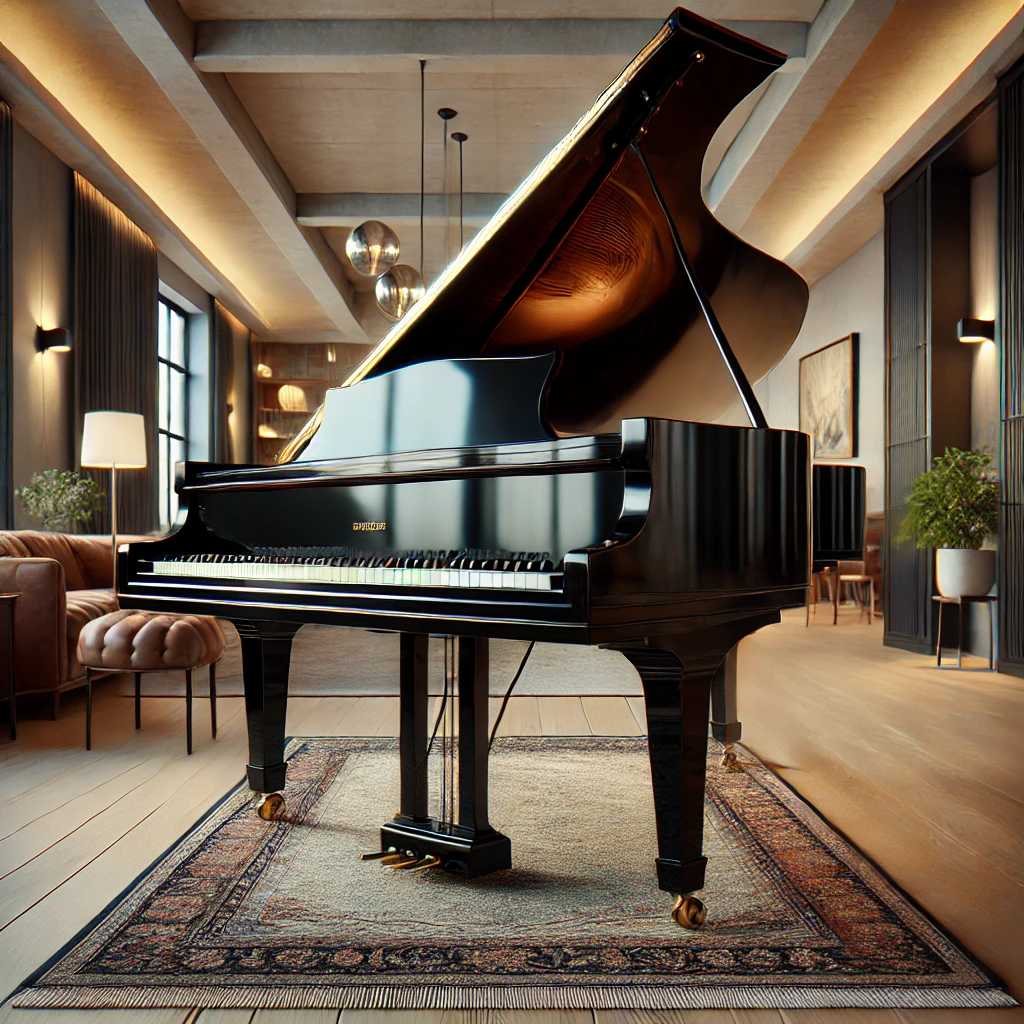
It's a question I often receive at parties - “Why is it,” a new acquaintance will ask, “that so many programmers are also musicians?” It’s a topic I love, connecting my two life's passions that rarely intersect for me externally and yet seem inextricably wound together internally. I'm surprised by just how many people make this association, sensing a commonality that is real but elusive. It’s a question like music itself: concrete in experience yet ephemeral in existence.
The connection, I think, lives in the realm where structure and outcome intertwine. Programming and music are crafts shaped by rules, yet both allow for infinite variation within their frameworks. Understanding one provides a glimpse into the other.
There's a lot to unpack, but I tend to simplify my answer into two themes: order of operations, and abstraction.
In both music and programming, there’s an inherent order — a sequence of operations that must unfold in time. The way a melody both aligns with and offsets from its accompaniment, the way that code tends to expand or contract based on what happens and when: both are bound by pattern and sequence. And yet, within this order, there’s freedom. The endless variation of composition based on sonata form is not so different from the multitude of approaches to building a user's journey through a common task.
Another analogy: chord progressions are like algorithms. Each chord flows into the following, setting up expectations for what's to come, resolving to an "answer" or providing options for what's next.
Music and programming both ask us to think about the relationships between parts and the whole. They are, in a sense, about choreography: the interaction between timing, structure, and intention - the invisible threads that tie a symphony or a software system together.
And then there’s abstraction — the attempt to represent something vast yet intricate in a simple and graspable way. A bridge between what we know and what we imagine.
Sheet music, like programming code, reduces complexity into symbols we can act upon. A written composition is nothing more than a set of instructions, just like a program. Both exist for the purpose of execution — by a musician, or by a machine.
A good song creates emotion through its internal logic — its patterns and "shape". You can swap out individual chords or add flourishes, but what remains is a series of sequences that are different but mostly the same.
Likewise a well-written program displays elegance through its use of functions and economy of expression. Programmers consider the whole while actively seeking to align sections that repeat with the exception of minor differences. When those segments build up into a cohesive and understandable program, we consider that program to be "well-factored".
Just as a single motif can hold the key to an entire movement, a single function can serve as the foundation to a sprawling system. In both disciplines, abstraction is not just the diminution of entropy, but also a window to comprehension.
Perhaps this is why so many of us are drawn to both music and programming. They both seek the same ambition - to express grand vision in a form that is both economical and elegant. Economy and elegance often oppose each other, which is where the art of tradeoffs begins. Both disciplines allow us to take something intangible — a feeling, a problem, an idea — and shape it into something material, something that can be shared.